Stainless Steel Metallographic Classification
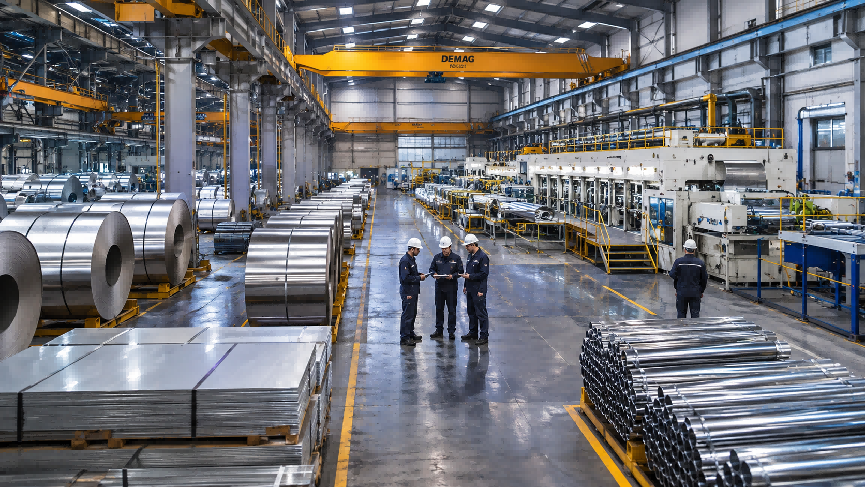
Stainless Steel Classification by Metallographic Structure
Stainless steel can be classified according to its metallographic structure. The microstructure of stainless steel directly affects its corrosion resistance, hardness, magnetism, weldability, and processing performance.
According to metallographic structure, stainless steel is mainly divided into five types: austenitic stainless steel, ferritic stainless steel, martensitic stainless steel, duplex stainless steel, and precipitation hardening stainless steel.
Austenitic Stainless Steel
Austenitic stainless steel offers excellent corrosion resistance, toughness, and weldability. It is generally non-magnetic and has good formability, making it one of the most widely used stainless steel types.
Common Grades: 201, 304, 316L, 310S
Features: Balanced overall performance, strong corrosion resistance, excellent processing ability, and good weldability.
Ferritic Stainless Steel
Ferritic stainless steel is a chromium-based 400 series stainless steel with relatively low nickel content. It is magnetic, cost-effective, and widely used in applications requiring heat resistance and oxidation resistance.
Common Grades: 430, 409L, 443
Features: Good heat resistance, thermal conductivity, and cost efficiency, but lower toughness compared with austenitic stainless steel.
Martensitic Stainless Steel
Martensitic stainless steel can be hardened by heat treatment. It has high hardness and strength, making it suitable for applications requiring wear resistance and mechanical performance.
Common Grades: 410, 420, 440C
Features: High hardness, good wear resistance, good machinability, and heat-treatable performance.
Duplex Stainless Steel
Duplex stainless steel combines both austenitic and ferritic structures. It offers higher strength than conventional austenitic stainless steel and excellent resistance to chloride stress corrosion cracking.
Common Grades: 2205, 2507
Features: High strength, excellent corrosion resistance, good weldability, and strong resistance to chloride-containing environments.
Precipitation Hardening Stainless Steel
Precipitation hardening stainless steel, also known as PH stainless steel, achieves high strength through aging treatment. It combines good corrosion resistance with excellent mechanical properties.
Common Grade: 17-4PH
Features: High strength, fatigue resistance, dimensional stability, and suitability for precision components.
Summary
Metallographic structure plays an important role in determining the key performance of stainless steel. Austenitic stainless steel is widely used for corrosion-resistant applications. Ferritic stainless steel provides cost advantages and good heat resistance. Martensitic stainless steel offers high hardness and wear resistance. Duplex stainless steel provides high strength and excellent chloride corrosion resistance. Precipitation hardening stainless steel is suitable for high-strength and precision applications.
Keywords: stainless steel classification, stainless steel grades, austenitic stainless steel, ferritic stainless steel, martensitic stainless steel, duplex stainless steel, precipitation hardening stainless steel, stainless steel material properties